Risk and Diversification: Don’t Put All Your Eggs in One Basket

Picture this: you put your entire £1,000 of savings into one company because a video told you it was “going to the moon”. Two weeks later the company tanks, and so does your money. Ouch. Now picture spreading that same £1,000 across thousands of companies, so that even if a few crash and burn, your overall pot barely flinches. That, right there, is the whole point of diversification — and it might be the single most important idea in investing.
Let’s unpack risk in plain English, with no scary maths. As ever, this is education, not financial advice, and your capital is at risk — but understanding risk is exactly how you stop it controlling you.
First: risk isn’t a dirty word
New investors often think the goal is to avoid risk entirely. It isn’t — and you can’t. Even cash carries risk (more on that in a second). The real goal is to understand the risks you’re taking and make sure you’re being sensibly compensated for them.
Here’s the core trade-off the whole industry runs on: risk and expected return are linked. Investments with higher potential returns generally come with more ups and downs along the way. There’s no magic asset that pays brilliantly with zero risk — if someone promises you that, run.
The main types of risk to know
“Risk” isn’t one thing. Here are the ones that actually matter to a young UK investor:
| Risk type | What it means | Everyday example |
|---|---|---|
| Market risk | The whole market can fall together | A global downturn drags nearly everything down |
| Concentration risk | Too much riding on one company or sector | All your money in a single trendy stock |
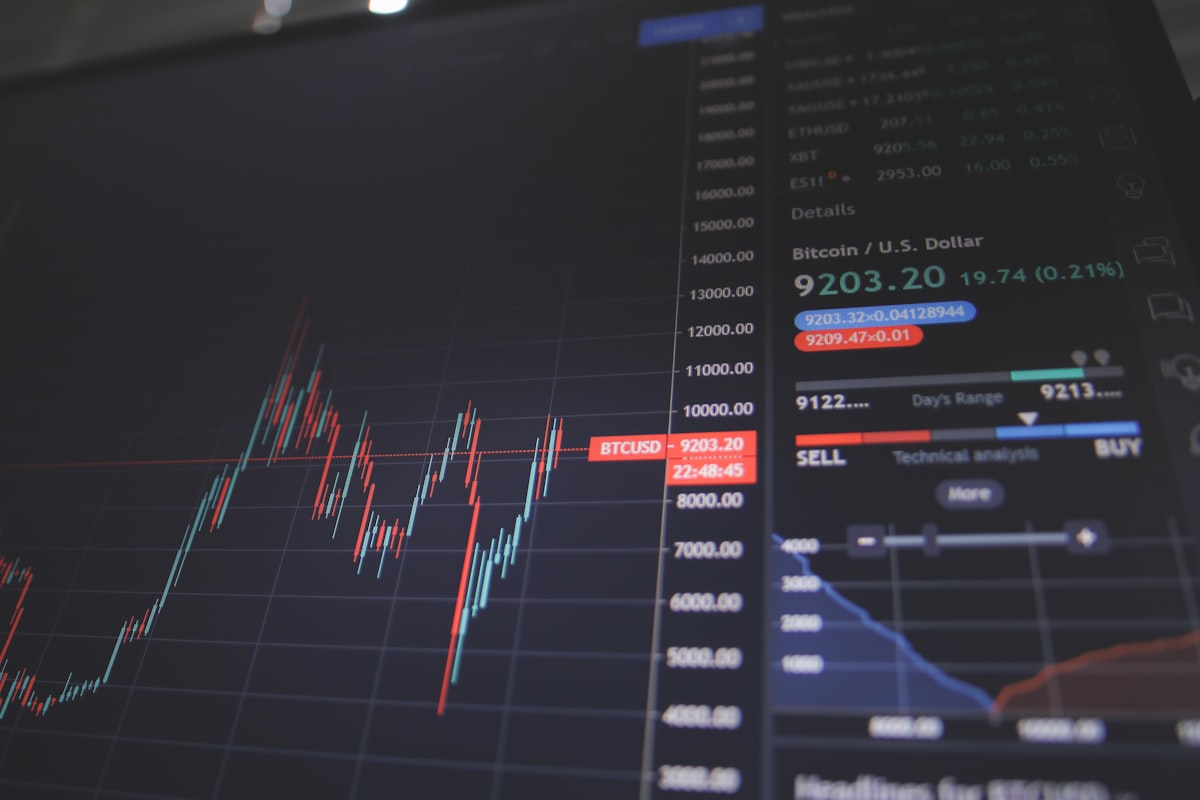
| Volatility | How wildly prices swing day to day | Crypto soaring 20% then dropping 30% |
| Inflation risk | Your money buys less over time | Cash under the mattress quietly losing value |
That last one surprises people. Leaving everything in cash feels safe, but if prices rise faster than your savings, you’re slowly losing buying power. “Safe” and “risk-free” are not the same thing.
Diversification: the only free lunch in finance
Diversification means spreading your money across many companies, industries, countries and asset types, so that no single failure can sink you. The classic phrase is “don’t put all your eggs in one basket” — drop one basket and you still have breakfast.
It’s often called the closest thing to a free lunch in investing, because it can reduce your overall risk without necessarily reducing your expected return. You’re not avoiding risk; you’re refusing to let any one bet decide your fate.
Concentration vs diversification: a tale of two £1,000s
Investor A puts all £1,000 into a single company. If it doubles, brilliant — but if it goes bust, they lose the lot. Their entire outcome rides on one roll of the dice.
Investor B puts £1,000 into a global index fund holding thousands of companies. If a handful collapse, it barely registers. They give up the lottery-win thrill in exchange for not getting wiped out by a single bad pick. For long-term investors, B’s approach is usually the smarter game.
The easy way to diversify (you’ll like this)
Here’s the good news: you don’t have to hand-pick a thousand companies yourself. A single global index fund or ETF can hold thousands of businesses across the UK, US, Europe and Asia in one tidy package. One purchase, instant diversification, low cost. It’s genuinely the simplest way for a beginner to spread their risk widely.
You can also diversify across where you invest — not just the UK’s FTSE 100, but globally — and across types of asset, like shares versus bonds. The more spread out you are, the less any single shock can hurt.
A word on the high-volatility stuff
Crypto, meme stocks, single hot companies — they’re exciting, and the swings are dramatic in both directions. There’s nothing wrong with learning about them, but they’re a textbook source of concentration and volatility risk. If you do explore them, treat them as a small slice of an otherwise diversified portfolio — money you can genuinely afford to lose.
Curious how the volatility actually feels? Read our UK crypto basics, then try our Crypto Simulator to watch the rollercoaster with zero real money on the line. Far better to feel that stomach-drop in a simulator than in your actual savings.
Risk is also about time
Your time horizon — how long until you need the money — shapes how much risk makes sense. Equities (shares) are a long-term game: think 5+ years, ideally far more. Over short periods they can lurch around alarmingly; over long ones, time smooths a lot of the bumps. That’s the meaning behind the old line: time in the market beats timing the market.
This is also why your emergency fund should sit in cash, not investments — money you might need next month has no business riding the market’s waves. Get that foundation first with our emergency fund guide.
Remember this
Can I be too diversified?
In theory, yes — owning fifteen overlapping funds that all hold the same companies just adds complexity and fees without extra protection. In practice, for most beginners, one or two broad global index funds already provide excellent diversification. Simple usually wins.
Where should I practise this?
Build a diversified (or deliberately undiversified) portfolio in our free trading simulator with a virtual £10,000 and watch how each behaves when markets move. Pair it with our free courses and the Jargon Buster for anything that sounds like a foreign language.
Risk isn’t the enemy — being blind to it is. Understand the types of risk, spread your eggs across plenty of baskets, match your risk to your time horizon, and you’ve already grasped what takes many investors years to learn. Now go forth and diversify.
Free interactive tool
Trading Simulator
Try the ideas from this guide yourself — free, no card required.
Open Trading SimulatorImportant: For educational purposes only. Not financial advice. Mustard Investments is not authorised or regulated by the Financial Conduct Authority (FCA). Capital is at risk when investing. Past performance is not a reliable indicator of future results. Tax rules depend on individual circumstances and may change.