Compound Interest: Your Secret Weapon for Building Wealth
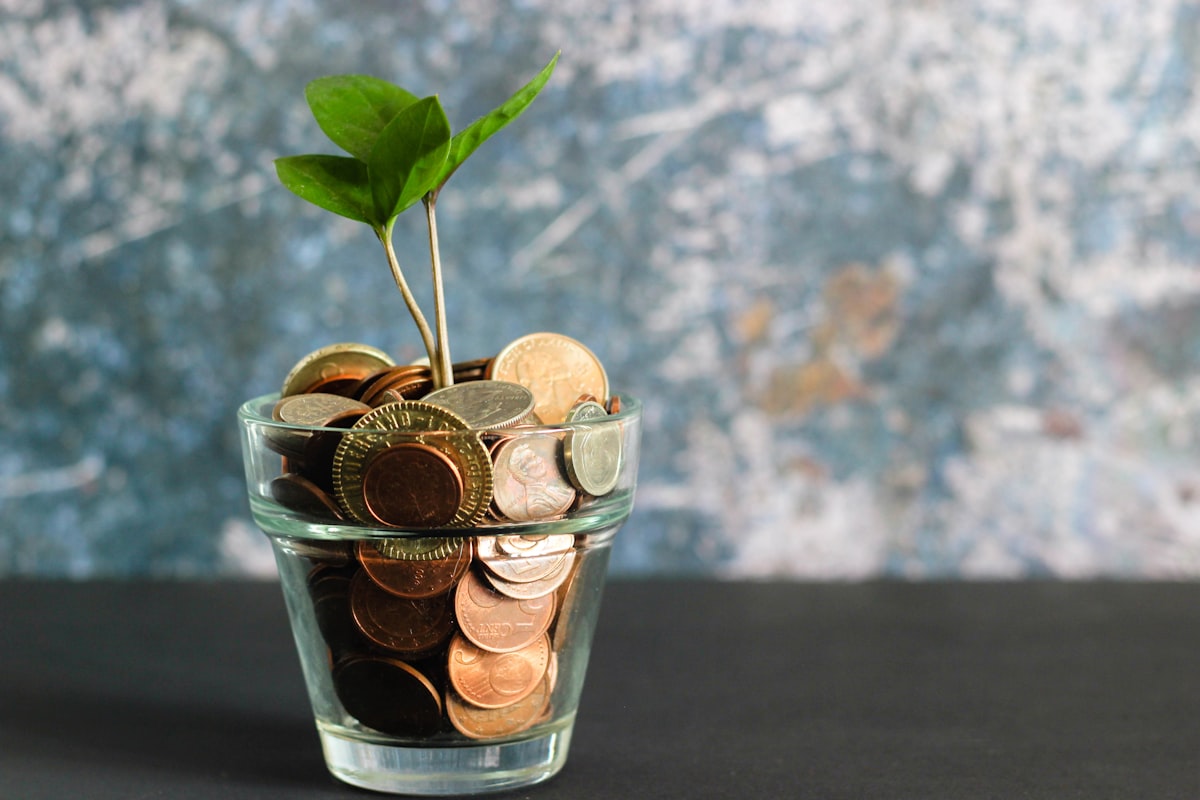
Albert Einstein supposedly called it the eighth wonder of the world. He probably didn’t — the quote is almost certainly made up — but the idea behind it is very real, and it’s arguably the single most important thing a 22-year-old can understand about money. Compound interest is the quiet force that turns small, boring amounts into genuinely life-changing sums, given one ingredient most people your age have in abundance: time.
Let’s strip away the mystique and show you, in plain English and with real £ figures, why starting now beats starting rich.
What compound interest actually is
Simple interest pays you on your original money and nothing else. Compound interest pays you on your original money plus all the interest you’ve already earned. In other words, your interest starts earning interest. That’s the whole trick — and it’s why people call it a snowball: a small ball of snow rolling downhill picks up more snow, gets bigger, and so picks up even more, faster and faster.
Put £1,000 in something that grows at 7% a year and don’t touch it. Year one, you earn £70. Year two, you don’t earn £70 again — you earn 7% of £1,070, which is £74.90. Year three, 7% of £1,144.90. Each year the base gets bigger, so each year the growth gets bigger too. It’s gentle at first and then, frankly, a bit ridiculous.
The snowball, in real numbers
Here’s what a single £1,000, growing at 7% a year with no further contributions, becomes over time. Notice the curve isn’t a straight line — it bends upward.
| Years invested | Value of £1,000 at 7%/yr | Growth so far |
|---|---|---|
| Start | £1,000 | — |
| 10 years | ≈ £1,967 | nearly doubled |
| 20 years | ≈ £3,870 | nearly quadrupled |
| 30 years | ≈ £7,612 | over 7× your money |
Look closely at the gaps. In the first decade your £1,000 adds about £967. In the third decade — same money, same rate — it adds over £3,700. You didn’t pay in a penny extra. That’s the snowball doing the heavy lifting, and it’s why the most valuable years of compounding are the ones furthest in the future. Which means the most valuable thing you can do is start them ticking now.
Worked example: same money, different start date
The Rule of 72: mental maths for money
You don’t need a spreadsheet to estimate compounding. There’s a lovely shortcut called the Rule of 72: divide 72 by your yearly growth rate, and you get roughly how many years it takes your money to double.
- At 7% a year: 72 ÷ 7 ≈ 10 years to double.
- At 4% a year: 72 ÷ 4 = 18 years to double.
- At 10% a year: 72 ÷ 10 ≈ 7 years to double.
It’s not perfectly precise, but it’s close enough to do in your head on the bus — and it makes the cost of a low return painfully obvious. A savings account paying next to nothing might take 30-odd years to double your money; a long-term investment growing at 7% does it in about ten.
Where do those returns even come from?
Fair question. A 7% figure isn’t a guarantee — it’s a rough, long-run historical average people often use for a diversified stock-market portfolio, and the real world is bumpier than any neat table suggests. Some years are up 20%, some are down 15%. The point of investing for the long term is to ride out the dips and let the average do its thing.
For most young investors in the UK, the practical route is a low-cost index fund or ETF held inside a tax-free wrapper like a Stocks & Shares ISA — we explain the wrapper itself in What is an ISA? Keeping returns out of the taxman’s hands means more of your money stays in the snowball, compounding harder. And you genuinely don’t need a fortune to begin: see How to Start Investing with £100.
One honest caveat, because this is education and not financial advice: investing puts your capital at risk. Values fall as well as rise, and you could get back less than you put in. Compounding rewards patience, but it doesn’t remove risk — which is why spreading your money around matters. We cover that in Risk and Diversification.
Regular contributions: pouring fuel on the fire
Everything above assumed a one-off £1,000. In reality, the magic ramps up when you drip money in regularly. Even £50 a month, added on top and left to compound, snowballs alongside your original pot — each contribution starting its own little chain of interest-on-interest. The earlier each pound goes in, the more time it has to multiply. That’s the whole case for automating a small monthly investment and forgetting about it.
The dark twin: compounding against you
Here’s the bit nobody puts on a motivational poster. Compound interest is gloriously powerful when it’s working for you — and brutal when it’s working against you. Debt compounds too.
A typical UK credit card charges somewhere north of 20% APR. Carry a balance and that interest compounds against you, fast — the same snowball, rolling downhill in the wrong direction and burying you. No sensible investment reliably beats 20% a year, so there’s no maths in which it makes sense to invest while paying that.
The golden order of operations
So what do you actually do with this?
Three takeaways, and that’s it:
- Start now, not when you feel ready. Time is the ingredient you can’t buy back, and you have the most of it right now.
- Be consistent. Small, automated, boring contributions beat occasional heroic ones.
- Mind the dark twin. Kill expensive debt first so compounding works for you, not against you.
The best time to plant a tree was twenty years ago; the second-best time is today. Same with compounding. Go play with the Compound Calculator, see your own future numbers, and when you want to feel investing without risking real money, our free trading simulator hands you a virtual £10,000 to experiment with. Future-you is already saying thanks.
Free interactive tool
Compound Calculator
Try the ideas from this guide yourself — free, no card required.
Open Compound CalculatorImportant: For educational purposes only. Not financial advice. Mustard Investments is not authorised or regulated by the Financial Conduct Authority (FCA). Capital is at risk when investing. Past performance is not a reliable indicator of future results. Tax rules depend on individual circumstances and may change.